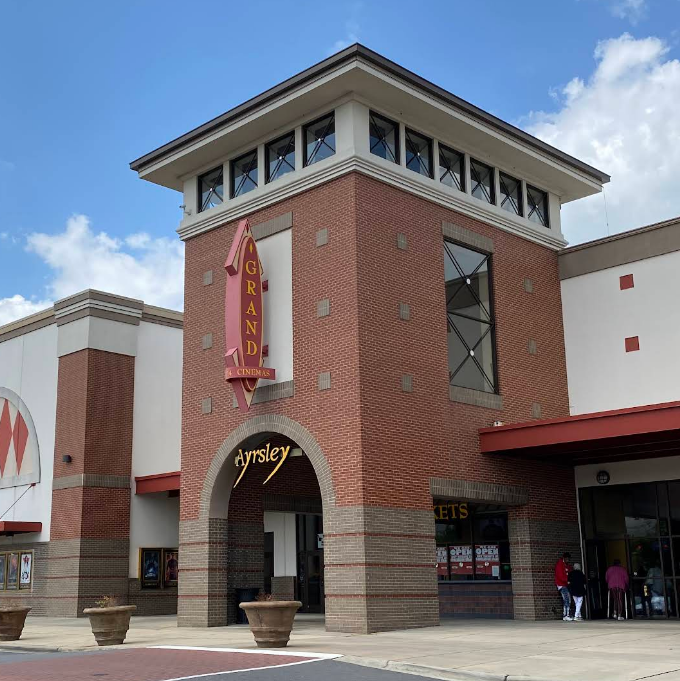

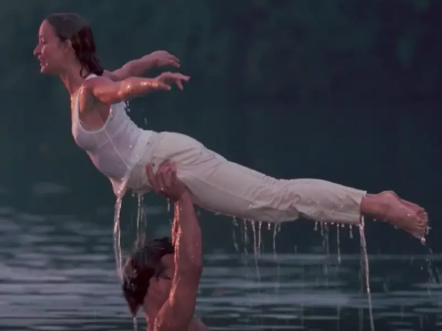
Growing up in North Carolina and visiting the mountains, you’re bound to hear it sooner or later: Dirty Dancing was filmed at Lake Lure. We claim that movie with fierce, unyielding local pride.
Yet there is a fascinating irony buried in those beautiful hills. While our scenery captured the magic of Kellerman’s Resort, the actual story of Dirty Dancing, set in the Catskills of upstate New York in the summer of 1963, could never have actually taken place in the American South at that time. As a Black girl, I grew up loving Baby and Johnny’s story completely and without reservation. But even then, something nagged at me early on; a quiet awareness that several of the freedoms the film takes for granted, the integrated dance floors, the open defiance of class and convention, the network of people willing to quietly help Penny, would have looked very different, or disappeared entirely, had the story been set a few hundred miles south.
A Lake Lure Tradition
In 2014, my husband and I took a trip to Lake Lure for a mix of anniversary and babymoon, one of our last romantic getaways before we settled into family life. I’d visited before as a girl, but remember very little of that first trip. This time was different. Everywhere we went, the spirit of the film followed us. “Oh, this scene was filmed here,” the locals would say, “and that scene was filmed just over there.” It’s a staple of North Carolinian tourism, and an entirely charming one.
But looking closely at the film’s narrative reveals a landscape that doesn’t quite fit our history. At its core, Dirty Dancing isn’t just a romance about a teenage girl’s summer awakening and the older man who teaches her to let loose. It’s a story about social liberation, and the specific kind of liberation it depicts was something the American South was still actively, violently refusing to allow.
What the Film Is Actually About
The movie’s B-plot centers on Johnny Castle’s dance partner, Penny, who faces an unwanted pregnancy by a man who abandons her. Baby steps in as Johnny’s dance partner so he doesn’t lose his livelihood, and later secretly recruits her physician father to intervene after a botched back-alley abortion goes terribly wrong.
This storyline would have been nearly impossible to see unfolding openly in 1960s North Carolina. The legal, social, and medical realities of the region during that era would have created a vastly different, and far more dangerous, outcome for Penny. The networks of quiet assistance the film treats almost casually simply did not exist in the same way here.
Why North Carolina Doesn’t Quite Fit
The cultural divide becomes even more apparent when you look at the dance floor. Several of the film’s most iconic sequences are strikingly integrated. We watch Johnny and Baby dance in a sweaty, underground staff club where a mix of white, Hispanic, and Black dancers grind together to rhythm and blues.
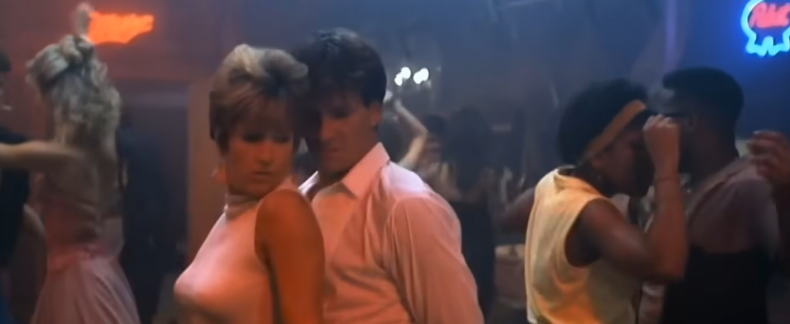
Again, this is a reality that simply wouldn’t have been happening in North Carolina back then. The early ’60s marked the era of the Greensboro sit-ins. Black Americans across our state were still actively and dangerously fighting for basic integration in public spaces. The idea of a casual, multicultural sanctuary tucked away in the North Carolina mountains of 1963 feels less like history and more like historical fiction.
The “What If” That Lingers
As a proud North Carolinian, I’ve often wondered what Dirty Dancing would look like if it were genuinely set in the South. The script would need more than cosmetic changes. Penny’s crisis would carry a different weight; fewer quiet allies, higher stakes, fewer escape routes. Johnny and Baby’s relationship would carry the added charge of crossing lines that Southern society enforced with brutal consistency. And that underground dance floor, integrated and joyful and free? It would have to be more hidden, more defiant, more aware of exactly what it was risking.
It would be a harder story. Maybe a more powerful one. Either way, it remains a creative “what if,” and perhaps that’s exactly why the film was set in New York.
What We Do Have
What we do have is the beautiful, enduring legacy of the film itself, and the gorgeous backdrop our mountains gave it. Dirty Dancing remains one of my all-time favorite romance movies. Even if the age gap between Johnny and Baby earns a modern eyebrow-raise, its emotional craft is undeniable; the way it uses dance as a language for class, desire, and freedom still holds up nearly four decades later.
This summer, I’m planning another trip to Lake Lure. I might even book a stay at the Jennifer Grey cabin at the 1927 Lake Lure Inn. I’ll walk the same ground, admire the same water, and love the same film, just with a clearer picture now of everything it quietly contained, and everything it quietly left out.